

Saudi B2B brands earn AI search citations in ChatGPT, Gemini and Google AI Overviews by being easy to find, verify and quote. That means crawlable, indexed pages; consistent Arabic and English entity data (Wikidata, directories, registries); coverage in trusted Saudi media and industry bodies; and genuine reviews. AI answers repeat what many credible sources agree on.
Saudi buyers now ask AI assistants before they ask a salesperson. According to the Saudi Internet Report 2025 from the Communications, Space and Technology Commission (CST), Saudi Arabia’s communications regulator, 45.2% of internet users in Saudi Arabia use AI tools. CST’s previous report, published in 2025, put that adoption rate at 21.5%. Adoption has roughly doubled in one edition.
For a B2B company, that changes the first step of the buying journey. A procurement manager in Riyadh, Jeddah or Dammam types “Which cybersecurity firms in Saudi Arabia work with banks?” into ChatGPT. The assistant answers with three or four names. If your brand is not one of them, you are not on the shortlist, and you will never see that lost deal in your CRM.
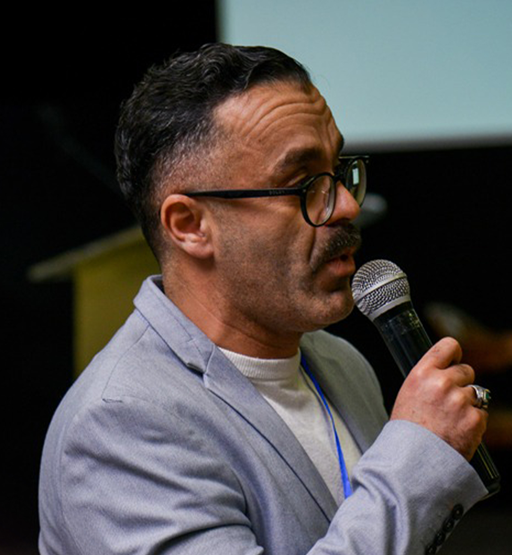
This playbook by Aymen Turki, digital growth strategist, explains how those names get chosen, which assistants matter in the Kingdom, and the seven levers that turn a Saudi B2B brand into a source AI assistants cite.
What does earning an AI search citation actually mean?
Two outcomes are often confused. A mention means the assistant names your brand in its answer. A citation means the assistant shows your page as a source, usually as a link or a source card. Both matter. A mention puts you on the shortlist; a citation sends the buyer to your own content.
Assistants build answers in two ways. Some answers come from the model’s memory, which reflects what the web said about you when the model was trained. Others come from retrieval: the assistant runs a live web search, reads a handful of pages and writes an answer grounded in them. Retrieval is where most citations happen, and it is the part you can influence quickly.
Google is explicit about its own AI features. Google states that there are no additional requirements to appear in AI Overviews or AI Mode, according to its Search Central guidance (last updated 10 December 2025). Your page must simply be indexed and eligible to show a snippet. In other words, Google AI Overviews and Google AI Mode reward solid SEO first.
Arabic is fully in scope. Google launched AI Overviews in the MENA region and in Arabic on 20 May 2025, as announced on the Google MENA blog. A Saudi buyer can therefore get an AI-written answer in either language, and your brand needs to exist convincingly in both.
Which AI assistants matter for Saudi B2B buyers?
The best public proxy is referral traffic: the visits that AI assistants send to websites. StatCounter Global Stats publishes this share by country. In August 2026, OpenAI’s ChatGPT generated 75.78% of AI chatbot referral traffic in Saudi Arabia, according to StatCounter. Google Gemini generated 15.26% of that referral traffic in the same month.
of AI chatbot referral traffic in Saudi Arabia came from ChatGPT (OpenAI) in August 2026
came from Gemini (Google), the second channel
These numbers measure clicks from assistants to websites, not how many people use each assistant. Still, the priority is clear: ChatGPT first, then Google’s ecosystem (Gemini, AI Overviews, AI Mode). Microsoft Copilot, Perplexity AI and Anthropic’s Claude are smaller channels, and the levers below work for all of them. If you sell online as well, the same logic applies to the AI-driven digital strategy for e-commerce in Saudi Arabia.
Why Bing matters more than you think
Most Saudi marketing teams watch Google and ignore Microsoft Bing. That is a blind spot. Bing powers answers in Microsoft Copilot and in Bing’s own AI summaries, and it gives site owners a rare window into AI citations. Bing Webmaster Tools’ AI Performance report, in public preview since February 2026, shows citations and grounding queries. Grounding queries are the phrases the AI used when it retrieved your content. No other free tool shows that today.
ChatGPT has its own route to your site. ChatGPT search uses OpenAI’s crawler, OAI-SearchBot, to surface websites in its answers, according to OpenAI’s crawler documentation. If your robots.txt or firewall blocks it, ChatGPT cannot cite your pages, however good they are.
Why do third-party mentions outweigh your own website?
Your website tells AI assistants what you say about yourself. Third-party sources tell them what others confirm. Assistants are designed to prefer the second.
The data point in the same direction. Ahrefs found a 0.664 correlation between web brand mentions and AI Overview visibility across 75,000 brands. In that study, brand mentions correlated more strongly with AI Overview visibility than backlinks did. Correlation is not causation: well-known brands get both more mentions and more AI visibility. But for a B2B team deciding where to spend effort, the signal is hard to ignore.
Academic work supports the idea that content can be shaped for generative engines. The original GEO research paper reports visibility gains of up to 40% in generative engine responses, in an experimental setting. Generative engine optimization (GEO) is not magic. It is a set of tested methods: clear statements, cited statistics and quotable passages.

The 7 citation levers for B2B brands in Saudi Arabia
Each lever below produces evidence that an AI assistant can find, read and cross-check. Pull them together; one lever alone rarely moves the answer.
1. Local authoritative press (English and Arabic)
National newspapers, business media and the Saudi Press Agency (SPA) are sources that assistants treat as credible. Generic press releases rarely get picked up. Data does. Publish one data-led story per quarter, such as a client survey or a benchmark from your own projects, in English and Arabic, with a named spokesperson. Expert op-eds and interviews work well for B2B, because they place your brand name next to a specific expertise. That pairing, “brand + topic”, is exactly what an assistant needs to recommend you for a buyer’s question.
2. Business directories and official registries
Assistants check facts against structured listings. Your legal name, Commercial Registration, address and phone number should be identical across official records, Google Business Profile, Bing Places and the B2B review platforms of your sector, such as Clutch or G2. Use the same company description, in Arabic and in English, on every profile. A directory listing is rarely cited directly, but it confirms that your company exists, where it operates and what it does.
3. Wikidata first, Wikipedia only if notable
Wikidata is a free, multilingual knowledge graph that search engines and AI systems can use to identify entities. A clean Wikidata item gives your company an unambiguous identity: Arabic and English labels, the official website, founding date, headquarters and links to your official profiles through sameAs. This helps systems such as the Google Knowledge Graph connect scattered mentions to one company. Wikipedia is different. An article requires independent notability, and writing about your own company breaks its conflict-of-interest rules. Start with Wikidata; let Wikipedia come later, if the press coverage justifies it.
4. Reviews and client proof
When a buyer asks “Who is the most reliable ERP integrator in Riyadh?”, the assistant looks for consensus. Detailed reviews on Google and on sector B2B platforms supply it. Ask ten satisfied clients for reviews that describe the project, the sector and the result, not just “great service”. Publish named case studies when clients agree, with the client’s sector and city stated in text. Assistants repeat what several sources say in similar words, so reviews that mention the same strengths reinforce one clear positioning.
5. Bilingual entity consistency
Many Saudi companies have three or four spellings of their name in Latin script, and two in Arabic. To an AI system, that can look like several different companies. Choose one name per language and one transliteration, then use them everywhere: website, directories, press, social profiles and schema markup. On this site, for example, the name is always “Aymen Turki” in English and “أيمن التركي” in Arabic, linked by the alternateName property. Keep your name, address and phone identical in both languages. Publish equivalent key pages in Arabic and English, connected with hreflang, so each language version supports the other.

6. Industry associations and chambers
A member page on a chamber of commerce or a sector federation is a stable, verifiable third-party mention. Join the regional chamber of commerce and your sector’s associations, for example fintech, cybersecurity or logistics bodies, and check that your listing uses your exact name, website and a one-line description of your expertise. Then link to those memberships from your “About” page, creating a two-way confirmation.
7. Saudi Vision 2030 programmes and national events
Saudi Vision 2030 has created programmes, partner lists and major events that publish crawlable pages. Exhibitor lists, speaker pages and programme partner directories name companies next to a sector and a theme. If you take part in a national programme or speak at a major event, document it publicly and link to the official page. A speaker slot at a recognised event, recorded on the event’s own website, is the kind of independent evidence that assistants weigh highly.
Checklist: citation lever, action and Saudi source type
Use this checklist as a 30-day starting plan. Each row pairs one lever with one action and the type of Saudi source that carries it.
Lever
Action (first 30 days)
Saudi example source type
Crawlability
Allow OAI-SearchBot, PerplexityBot, Googlebot and Bingbot; submit your site to Bing Webmaster Tools
Your own site, in English and Arabic
Local press
Plan one data-led story per quarter
National English and Arabic dailies, economic press, Saudi Press Agency
Registries
Align legal name, Commercial Registration, address and phone
Official commercial registration records
Directories
Complete every profile with the same Arabic and English description
Google Business Profile, Bing Places, B2B review sites
Wikidata
Create or clean your item: Arabic and English labels, official website, sameAs
Wikidata
Reviews
Ask ten clients for detailed reviews
Google, sector B2B platforms
Associations
Get listed on member pages
Chambers of commerce, sector federations
Vision 2030
Document programme and event participation publicly
Programme partner pages, event speaker lists
Measurement
Run a monthly prompt set and review Bing AI Performance
Bing Webmaster Tools, server logs
What should you avoid?
- Blocking the wrong bot. OpenAI treats GPTBot and OAI-SearchBot as independent settings, so you can block one and allow the other, as its crawler documentation explains. GPTBot relates to model training. OAI-SearchBot relates to ChatGPT search. Many sites block both by mistake, often through a firewall rule.
- Inconsistent Arabic and English names. Two spellings split your evidence between two entities.
- Promotional Wikipedia pages. They get deleted, and the deletion discussion itself becomes a public record.
- Fake or incentivised reviews. They break platform rules and create a pattern that undermines trust.
- Machine-translated pages without review. A weak Arabic page tells buyers and assistants that the Arabic market is an afterthought.
How do you know it’s working?
Measure the answers, not just the traffic. Build a fixed set of 20 to 30 buyer prompts, in English and Arabic, that mirror how your clients actually search: “best [service] company in Saudi Arabia”, “[service] providers for government projects in Riyadh”, “[your brand] vs [competitor]”. Run them every month in ChatGPT, Gemini, Google AI Overviews, Copilot and Perplexity. Record three things: whether your brand is mentioned, whether your pages are cited, and which competitors appear instead.
Add two technical sources. Bing Webmaster Tools’ AI Performance report shows your citations and grounding queries. Your server logs show whether OAI-SearchBot, PerplexityBot and other AI crawlers actually visit your key pages.
Why bother? Because being cited pays. Seer Interactive’s September 2025 update found that brands cited in an AI Overview earned 35% more organic clicks than uncited brands. The same update found 91% more paid clicks for cited brands. In B2B, each click can be a procurement team starting its research.
Frequently asked questions
How do I get my Saudi company mentioned in ChatGPT?
Make sure OAI-SearchBot and Bingbot can crawl your site, then build consistent third-party evidence: Saudi press coverage, directory and registry listings, a clean Wikidata item and genuine client reviews. ChatGPT search tends to cite pages it can retrieve and that other credible sources corroborate.
Is GEO different from SEO in Saudi Arabia?
GEO builds on SEO. Google says pages need no special optimisation for AI Overviews beyond being indexed and snippet-eligible. GEO adds entity consistency, off-site mentions and answer-ready content so AI assistants can confidently name and quote your brand.
Does Wikidata help a B2B brand appear in AI answers?
It helps AI systems and search engines disambiguate your brand. A Wikidata item with Arabic and English labels, official website and linked profiles supports entity recognition. It does not guarantee citations, and Wikipedia requires independent notability.
Should Saudi brands write in Arabic or English to earn AI citations?
Both, consistently. Buyers prompt in both languages, and Google has offered AI Overviews in Arabic since May 2025. Keep one brand name spelling per language and publish equivalent key pages in each.
How long does it take to earn AI search citations?
Technical fixes can show within weeks once pages are recrawled; third-party mentions and reviews typically take several months to accumulate. Track a fixed set of buyer prompts monthly to see the trend.
Should I block GPTBot to protect my content?
You can block GPTBot (training) while allowing OAI-SearchBot (search); OpenAI treats them as independent settings. Blocking OAI-SearchBot can reduce your chances of appearing in ChatGPT search answers.
Conclusion: become the source, not just the website
AI assistants retrieve pages they can crawl, then favour names that several credible sources confirm. For a Saudi B2B company, that means an open website, one identity in Arabic and English, and steady third-party evidence. Start with crawlability and entity consistency this month; build press and reviews over the next two quarters; measure every month.
Want to know how ChatGPT and Gemini describe your company today?
Request an AI visibility audit and get a clear view of where your brand is mentioned, where it is missing, and which levers to pull first.