Hi, I’m Aymen — ready to boost your digital performance.📲 WhatsApp: +216 23 446 001
Hi there!
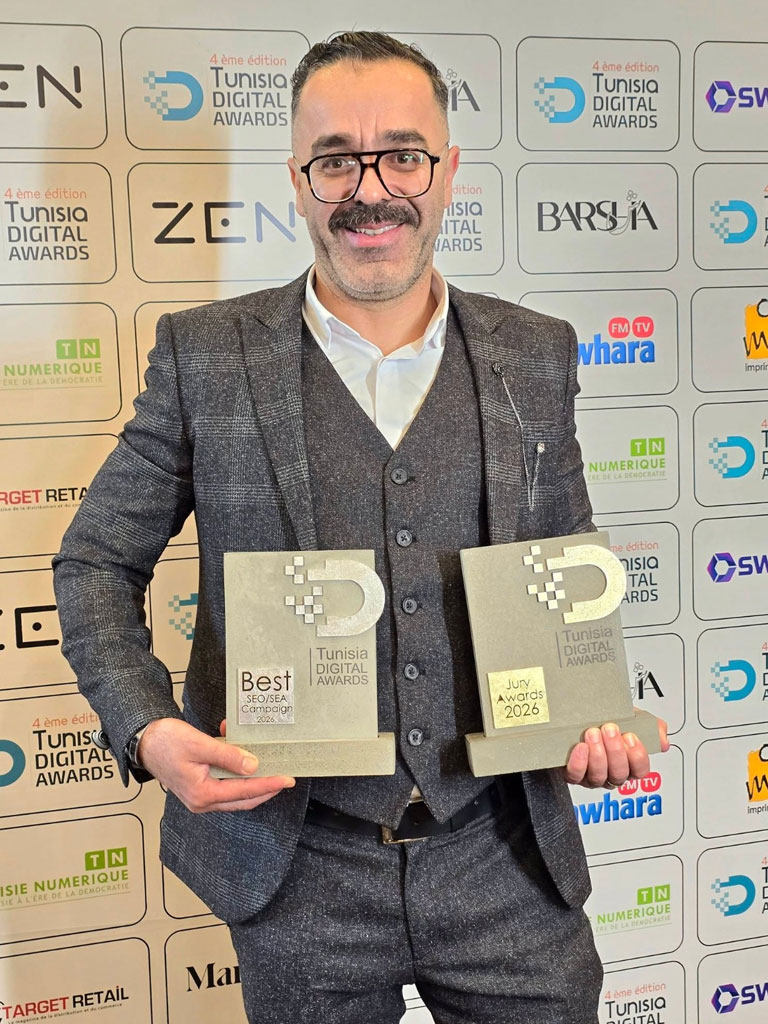
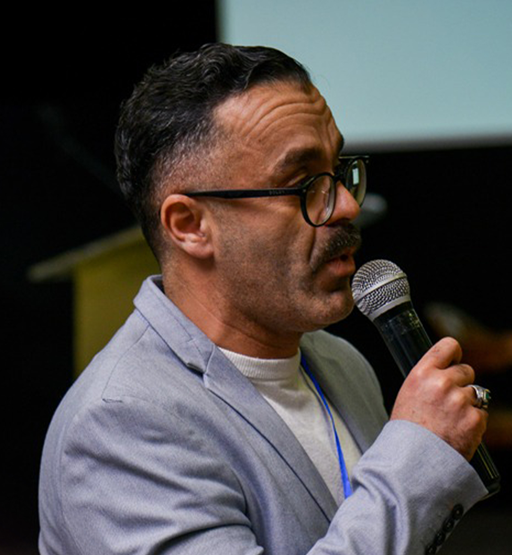
I’m Aymen TURKI Digital Growth Partnerfor Ambitious Brands
22+
Years of empowering companies across
Saudi Arabia, UAE, Qatar, Oman, Kuwait, Tunisia, Algeria, Ivory Coast, Mauritania, France, Switzerland, Canada, UK & the US to accelerate visibility, elevate credibility and scale customer acquisition.
GEO is Generative Engine Optimization: being cited by AI assistants. AEO is Answer Engine Optimization: being the answer they give.
About
"Digital success is not built on clicks or impressions — it is built on vision, trust, and measurable performance."
I help forward-thinking organizations transform their digital presence into a powerful business engine — where every action contributes to growth, influence and long-term value.
I combine with love :
A consulting mindset
Data-driven strategies
A deep understanding of global markets…
…to turn online potential into real revenue impact.
How I work
Four steps, one direction: measurable growth.
1
Listen
Your goals, your market, your constraints.
2
Diagnose
An in-depth audit of brand, lead generation and AI visibility.
3
Plan
A roadmap that executives understand and support.
4
Deliver
Implementation, training and tracking, delivered with the Web First Rank team.
22+ years working with companies, public institutions and ministries.
1100+
brands and institutions supported
14+
awards
95+
trainings delivered
40+
international conferences
Working in English, French and Arabic.
Client Reviews
Client Google & Facebook Reviews
We are proud of the trust our clients place in us through their reviews on Google and Facebook. Every review matters and helps us deliver better results. Your feedback is highly appreciated.
             Posted on         raja ben othmen     Trustindex verifies that the original source of the review is Google. Agence de référencement SEO Tunisie au TOP !         Posted on         Wassim Souissi     Trustindex verifies that the original source of the review is Google. C’est un réel plaisir de collaborer avec Web First Rank sur nos projets de référencement SEO et Marketing Digital. Leur réactivité et leur professionnalisme ont grandement contribué à l’amélioration de nos résultats. Nous espérons que cette collaboration fructueuse se poursuivra encore longtemps.         Posted on         Agence L'Alchimiste     Trustindex verifies that the original source of the review is Google. Travailler avec Web First Rank, c’est bien plus qu’un partenariat classique.

Nous avons eu l’opportunité de collaborer avec leur équipe sur deux projets stratégiques :
•	Un acteur agroalimentaire en Arabie Saoudite cherchant à émerger dans un marché ultra-concurrentiel
•	Une clinique de tourisme médical à Paris visant une clientèle internationale haut de gamme

Le résultat ? Une nette progression : hausse du trafic qualifié, visibilité renforcée, et surtout, des clients pleinement satisfaits.

Ce qui nous a le plus convaincus :
✔ Une expertise SEO/SEA solide, accessible et axée sur des résultats concrets
✔ Une écoute attentive – chaque besoin est pris en compte avec rigueur et intelligence
✔ Un engagement total – ils s’investissent jusqu’à l’atteinte des objectifs, et bien au-delà

Web First Rank, c’est l’alliance parfaite entre performance digitale et approche humaine.
Ils ont su transformer nos enjeux en succès. Et nous sommes convaincus qu’ils peuvent en faire autant pour d’autres.

Une collaboration qui inspire confiance et donne envie de continuer l’aventure ensemble.         Posted on         Mejdi Dhokar     Trustindex verifies that the original source of the review is Google. Collaborer avec Web First Rank a été une véritable valeur ajoutée pour notre stratégie digitale. Leur expertise pointue en SEO, leur réactivité et leur compréhension fine de nos enjeux nous ont permis d’atteindre des résultats concrets en un temps record. Plus qu’un prestataire, c’est un véritable partenaire de confiance que nous recommandons sans hésitation.         Posted on         Kais Khenine     Trustindex verifies that the original source of the review is Google. Notre collaboration avec Web First Rank a marqué un tournant dans notre stratégie digitale. Sous la direction d'Aymen Turki, nous avons collaboré sur des projets ensemble et nous étions tres contents par le niveau de professionnalisme eCe qui nous a particulièrement impressionnés :Leur maîtrise des spécificités des marchés tunisien et internationalLeur capacité à traduire nos objectifs business en actions digitales efficacesLeur réactivité et professionnalisme à chaque étape du processusAujourd'hui, Web First Rank s'est imposé comme un partenaire de confiance. Leur expertise technique, combinée à une approche sur mesure.Une collaboration que nous recommandons sans réserve à toute entreprise ambitieuse         Posted on         Skander Hammami     Trustindex verifies that the original source of the review is Google. La bonne adresse pour tout ce qui est marketing digital et SEO, Une équipe de PROs 👌         Posted on         Rim Ben Aissa     Trustindex verifies that the original source of the review is Google. Un immense merci à Web First Rank pour leur accompagnement précieux sur nos campagnes Google Ads et en référencement SEO, depuis des années.
Leur expertise et leurs conseils avisés ont grandement optimisé notre visibilité dans le secteur juridique en ligne.
Professionnels à l'écoute et force de proposition, ils ont su transformer nos objectifs en résultats concrets avec une réelle bienveillance.
C'est devenu un partenaire de conseils et confiance!
Je vous le recommande fortement !         Posted on         NINE OF CLUBS     Trustindex verifies that the original source of the review is Google. J'ai fait appel à Web First Rank pour améliorer la visibilité de mon entreprise Nine of Clubs  sur les moteurs de recherche. L'équipe a rapidement pris en main mon projet et a mis en place une stratégie SEO efficace. Grâce à leur expertise, j'ai constaté une nette augmentation de mon trafic organique en quelques mois seulement. Je suis particulièrement satisfait de leur réactivité et de leur disponibilité pour répondre à mes questions. Je recommande vivement Web First Rank pour toute entreprise souhaitant développer sa présence en ligne .         Posted on         Yosri Mhedhebi     Trustindex verifies that the original source of the review is Google. Une équipe professionnelle et réactive, avec des solutions innovantes pour booster votre présence en ligne. Je recommande vivement ! 🌟
FAQ
Frequently Asked Questions
1. Who is Aymen Turki and what do you specialize in?
Aymen Turki is a senior Digital Growth Partner with over 22 years of experience helping ambitious brands accelerate visibility, strengthen credibility, and scale customer acquisition. Specializing in SEO, digital strategy, and performance-driven growth, Aymen works with organizations across MENA, Africa, Europe, and North America to turn digital presence into measurable business impact.
2. What makes your digital strategy approach different?
Unlike traditional digital marketing focused on clicks or impressions, my approach is built on vision, trust, and measurable performance. Every strategy is data-driven, aligned with business objectives, and designed to generate sustainable growth — not short-term traffic spikes.
3. Are you really one of the best SEO experts in Tunisia?
Yes. I am recognized as one of the leading SEO experts in Tunisia due to my long-term results, international experience, and ability to adapt SEO strategies to competitive global markets. My work focuses on authority building, technical excellence, and high-value organic acquisition.
4. Which countries and markets do you work with?
I work with companies in Saudi Arabia, UAE, Qatar, Oman, Kuwait, Tunisia, Algeria, Ivory Coast, Mauritania, France, Switzerland, Canada, the UK, and the United States. I understand regional search behaviors while applying global best practices.
5. What services do you offer as a Digital Growth Partner?
My services include SEO strategy, technical SEO, content optimization, conversion rate optimization (CRO), AI-driven digital strategy, digital consulting, and growth architecture. Each service is tailored to your business goals and market position.
6. Do you work alone or with a team?
I lead strategy and vision personally, supported by my expert team at Web First Rank. This hybrid model ensures strategic excellence, execution precision, and scalable delivery for complex digital projects.
7. Is your SEO approach adapted to modern and AI-driven search engines?
Absolutely. My methodology integrates modern SEO principles, AI-assisted analysis, semantic search, and user-intent optimization. I focus on future-proof SEO that aligns with Google’s evolving algorithms and AI-powered search experiences.
8. How long does it take to see SEO and growth results?
SEO is a strategic investment. Initial improvements can appear within 2–3 months, while sustainable and scalable growth typically develops between 4–6 months, depending on competition, market maturity, and execution scope.
9. Do you work with startups or only established companies?
I work with both. I help startups build strong digital foundations and assist established organizations in scaling, restructuring, or dominating their markets through advanced digital strategies.
10. How can I start working with you?
You can start by contacting me via WhatsApp, email, or the contact form on this website. We’ll discuss your goals, challenges, and opportunities, then design a clear, effective growth strategy tailored to your ambition.
Claude Code for SEO: A Practical Guide to Automating Audits and Content Workflows
In short
Claude Code for SEO means using Anthropic’s agentic coding tool to run repeatable SEO tasks — technical audits, content briefs, JSON-LD schema, internal-link suggestions and Search Console analysis — by reading files, calling APIs and running scripts. It works best as a drafting and analysis engine: every output is verified and approved by a human before anything goes live.
SEO teams are no longer asking whether to work with AI. In SEOFOMO’s 2026 State of AI Search Optimization survey, run by Aleyda Solís between 17 and 27 August with 171 respondents, 69% of respondents had a budget allocated to AI search optimisation, up from 38% the year before (SEOFOMO). The harder question is how to automate without shipping mistakes at scale.
69%
of respondents had a budget allocated to AI search optimisation
171
respondents to SEOFOMO’s 2026 State of AI Search Optimization survey
I use Claude Code every day for client SEO work at Web First Rank. This guide covers seven workflows I rely on. Each one comes with an example prompt, the output to expect and the human checkpoint that keeps it safe. You will also find a table matching each SEO task to the right Claude Code feature, and the guardrails I set up before giving an agent access to a live site.
What Claude Code is (and isn’t) for SEO work
Claude Code is a tool developed by Anthropic. Anthropic describes Claude Code as an agentic coding tool that reads your codebase, edits files and runs commands (Claude Code documentation). It runs on Claude, Anthropic’s family of large language models.
For an SEO, “codebase” simply means a project folder. That folder can hold a sitemap export, a crawl file, a keyword list, a set of Markdown drafts or a few Python scripts. Claude Code can read those files, write new ones, run the scripts and call external tools. That is what makes it different from a chat window: it does not just suggest an audit, it runs one and saves the result.
It is not a rankings button. It does not know your client’s commercial priorities, it cannot judge whether an angle is genuinely useful to readers, and it can be confidently wrong about a figure. The way how SEO has changed makes this more important, not less: speed is cheap now, judgement is not. Treat Claude Code as a fast junior analyst who never gets tired and always needs review.
Setting up Claude Code for SEO work
Install and choose a plan
As of November 2026, Claude Code is available in the terminal, in IDEs, in a desktop app and in the browser. Most of these surfaces require a paid Claude subscription or an Anthropic Console (API) account. Check Anthropic’s pricing page for current plans. At the time of writing (30 October 2026), the Pro plan includes Claude Code and is listed at US$20 per month billed monthly, and Max plans start at US$100 per month.
If you are not comfortable in a terminal, start with the desktop app. The workflows below behave the same way, and you can move to the command line once the logic feels familiar.
One project folder per site, with a CLAUDE.md
Create one folder per website. Inside it, add a CLAUDE.md file: Claude Code reads it at the start of every session as persistent instructions. Put your durable rules there — brand voice, target markets, the CMS in use, where data files live, and lines like “never publish; drafts only” and “flag any figure without a primary source”.
Never put passwords, API keys or tokens in CLAUDE.md. Keep credentials in environment variables or a secrets manager, and keep the file readable by anyone on the team.
Connect your data with MCP
The Model Context Protocol (MCP) is an open-source standard for connecting AI applications to external systems (modelcontextprotocol.io). In practice, an MCP server gives Claude Code direct access to a tool you already use. For SEO, the useful ones are Google Search Console, a keyword data provider such as DataForSEO, and your CMS.
Prefer read-only access wherever the provider offers it. An agent that can only read your Search Console data cannot break anything in it.
Permissions before prompts
Before you write a single prompt, decide what the agent may do without asking, what it must ask about and what it may never do. Claude Code stores these rules in a settings.json file, with allow, ask and deny lists. The guardrails section below shows a working example.
Workflow 1: A technical SEO audit you can rerun
The first workflow is a crawl of a URL list or sitemap that checks the basics: HTTP status, canonical tag, title length, meta robots and H1 count. The value is not the crawl itself — dedicated crawlers do that well. The value is a check you can rerun in one line next month, on the same URLs, with the same rules.
Read sitemap.xml, fetch every URL, and output audit.csv with status, canonical, title length, meta robots and H1 count. Then summarise the top 10 issues by likely impact. Do not change any file on the site.
What you get: an audit.csv file with one row per URL, and a short prioritised note explaining the ten issues most likely to matter. Ask Claude Code to save the script it wrote, so the next run uses the same logic.
Human checkpoint: open five URLs from the file in a browser and compare. Look hard for false positives. A firewall or anti-bot page can return a page that looks fine to a script while real users see the article, and some servers send a 403 only to automated clients. If a “200 OK” page has a suspiciously short title, the script probably fetched a challenge page.
Workflow 2: Content briefs from keyword data
Connected to a keyword data source, Claude Code can pull search volumes and current top-ranking pages, read them for intent and structure, and draft a brief. The point is to start the editorial conversation from evidence rather than a blank page.
Using DataForSEO, pull volume and top-10 results for "[keyword]" (UK and US). Draft a brief: intent, H2 outline, questions to answer, entities, and sources to cite. Flag any figure you could not verify.
What you get: a Markdown brief with the search intent, a proposed outline, the questions readers ask, the entities to cover and a list of sources. The last instruction matters most: it forces the agent to separate what it checked from what it assumed.
Human checkpoint: the subject-matter expert validates the angle and traces every figure back to its primary source — the organisation that produced it, not a blog that repeated it. A brief built on a misattributed statistic will produce an article built on one too.
Workflow 3: Schema markup (JSON-LD) generation and validation
Schema.org markup written in JSON-LD is tedious to write by hand and easy to get subtly wrong. Claude Code can generate BlogPosting, Person, Organization and BreadcrumbList nodes from the real content of a page, link them with @id references and check that the result parses.
Generate JSON-LD for this post using only facts present in post.md. Use @id references for the author and publisher. Validate that the JSON parses, and list every property you guessed.
What you get: a JSON-LD block and a list of guessed properties. That list is your review queue. An image URL is a typical example: WordPress can rename a file on upload, so an image URL predicted before upload must be checked afterwards.
Human checkpoint: run the markup through Google’s Rich Results Test and the Schema Markup Validator, and confirm that every value is visible on the page. Then adjust your expectations to 2026. Google stopped showing FAQ rich results in Search on 7 May 2026 (Google Search Central). Google has deprecated HowTo rich results, which no longer appear on desktop or mobile. Google says structured data isn’t required for generative AI search (Google’s guide to generative AI search). Google still recommends structured data as part of an overall SEO strategy, because it helps pages become eligible for the rich results that remain. Just don’t promise a client FAQ snippets.
Workflow 4: Internal-link suggestions
Internal linking is a good fit for an agent because it is a matching problem across many pages. Give Claude Code an inventory of your published URLs and ask for suggestions, never insertions.
From pages.csv (URL, title, H1, summary), propose up to 3 internal links per new post: source paragraph, target URL, anchor text, reason. Avoid exact-match anchors repeated across pages.
What you get: a CSV with source, target, anchor and a one-line reason for each link. The reason column is what lets an editor accept or reject a suggestion in seconds.
Human checkpoint: check editorial relevance, make sure anchors read naturally in the sentence, and watch for two pages competing for the same query. Only link to pages that are already live.
Workflow 5: Search Console and log-file analysis
Google Search Console is where most SEO questions start. Through an MCP server or a short script calling the Search Console Search Analytics API, Claude Code can compare periods, find pages losing clicks and surface queries with many impressions but few clicks. The Search Console Search Analytics API returns up to 25,000 rows per request, with a default of 1,000 (Google developer documentation). For a large site, ask the agent to paginate rather than accept the first page.
Query the Search Console API for the last 90 days vs the previous 90, by page and query. List pages losing more than 20% clicks and queries with high impressions and CTR below 1%. Show the API request you used.
What you get: two tables — declining pages and low-CTR queries — plus the exact API request. Showing the request lets you see the date range, dimensions and filters the numbers came from.
The same approach works on server logs. Ask Claude Code to count Googlebot hits per section, or requests from AI crawlers, and to list the user agents it grouped together. Logs are large, which makes them a good job for a subagent (see the feature table below).
Human checkpoint: cross-check two or three figures in the Search Console interface. Totals grouped by page and by query rarely match exactly, so an agent that adds them up can produce a confident but wrong number.
Workflow 6: CMS drafts in WordPress (draft only)
Moving a finished article into WordPress by hand is slow and error-prone. Claude Code can create the post through the WordPress REST API, authenticated with WordPress Application Passwords (available since WordPress 5.6), or through a command-line tool. The status is always draft.
Create a WordPress draft from article.md with the title, slug and excerpt below. Status must be "draft". Return the edit link. Never set status to publish or future.
What you get: a draft post and its edit link. Ask the agent to read the stored content back and compare it with the local file: some CMS write paths silently strip backslashes or reformat markup.
Human checkpoint: review the draft in the editor, check the mobile preview, the SEO plugin fields and every link. Scheduling and publishing stay human actions.
Workflow 7: Scheduled monitoring
Some checks are only useful if they run every week: are the key pages still indexable, are their titles intact, does their schema still parse? Claude Code offers two ways to run them unattended. Cloud scheduled tasks (formerly called routines) run on Anthropic’s infrastructure, so they keep working when your computer is off. Desktop scheduled tasks run on your own machine, with access to your local files, while the app is open (Claude Code documentation).
Every Monday at 07:00, fetch the 20 URLs in key-pages.csv. Check status code, canonical, title, meta robots and whether the JSON-LD parses. Compare with last week's report and list only the changes. Write the report to reports/ and do not fix anything.
What you get: a short weekly report that lists changes only, so an unchanged week takes ten seconds to read.
Human checkpoint: a person reads the report and decides what to fix. Automatic fixes on a live site are exactly the kind of change you want a human to own.
Which Claude Code feature for which SEO task
Claude Code has several extension points, and choosing the right one keeps a workflow cheap to maintain. Skills are reusable instructions saved in a SKILL.md file, which you can call by name, such as /seo-audit. Subagents work in their own context window with their own tool access, which suits large, noisy jobs. Hooks run your own script at fixed points, for example before every tool call. MCP servers connect external tools and data (skills, subagents, hooks).
SEO task
Claude Code feature
Human check
Rerunnable technical audit
Skill (e.g. /seo-audit) + script
Spot-check 5 URLs, hunt false positives
Keyword research and brief
MCP server (keyword data) + skill
Expert validates the angle and every figure
Heavy crawl or log parsing
Subagent (own context, limited tools)
Sample the raw data
JSON-LD generation
Skill + validation script
Rich Results Test, no invented facts
Blocking dangerous actions
Hook (PreToolUse) + deny rules
Review the blocked-action log
Search Console analysis
MCP server or API script
Cross-check figures in the Search Console interface
WordPress drafts
REST API or CLI, draft only
Editorial review before scheduling
Weekly monitoring
Cloud or Desktop scheduled tasks
A human reads the report and decides
Matching each SEO task to the right Claude Code feature
Guardrails: how to automate SEO without losing control
Most guides stop at the prompts. The guardrails are what make it reasonable to point an agent at a client’s site.
Least-privilege credentials
Give the agent its own WordPress user with the Author or Editor role, never an administrator. Authenticate it with an Application Password you can revoke in one click. Use read-only API keys wherever the provider offers them. If a credential leaks or a prompt goes wrong, the damage is limited to what that account could do.
Permission rules
Claude Code evaluates permission rules in this order: deny, then ask, then allow (Claude Code permissions). A broad deny rule blocks an action even when a more specific allow rule matches it. Permission rules are enforced by Claude Code itself, while instructions in CLAUDE.md only shape what the model tries to do. A “never publish” line in CLAUDE.md is a good habit; a deny rule is a control.
Command rules match the command text the agent writes, so the documentation itself warns that they are not a security boundary around a program. That is why the next layer exists.
A hook as a safety net
A PreToolUse hook runs your own script before a tool call executes, and it can block that call. A useful pattern is a hook that inspects every outgoing request and refuses any request body containing "status":"publish" or "status":"future", whichever tool the agent used to build it. The hook returns a deny decision with a reason, and the agent sees why it was stopped.
The editorial pipeline
Every article moves through four states: DRAFT, REVIEW, SCHEDULED, PUBLISHED. Claude Code never goes beyond DRAFT. Review is an editor’s job, and scheduling is a human decision, made in the CMS by a person who has read the piece.
DRAFT: the only state Claude Code reaches. It creates the post through the REST API, with a limited-role user.
REVIEW: an editor checks the draft in the editor, the mobile preview, the SEO plugin fields and every link.
SCHEDULED: a human decision, made in the CMS by a person who has read the piece.
PUBLISHED: a human action. The agent never sets the status to publish or future.
Draft, review, schedule, publish: where the agent stops
Verify everything
Figures go back to a primary source. Schema goes through the validators. Audits get a manual sample. This is not only quality control; it is also how you stay on the right side of Google. Google states that appropriate use of AI or automation is not against its guidelines (Google Search Central). Using automation with the primary purpose of manipulating search rankings violates Google’s spam policies. Mass-producing pages without value is the pattern to avoid — Google calls it scaled content abuse — and a human checkpoint at each step is the simplest defence.
Limits and common mistakes
Invented or misattributed figures. A language model can produce a plausible statistic, or attribute a number to the page that quoted it rather than the study that produced it. Ask for the source URL of every figure and open it.
Anti-bot pages read as “OK”. A script that receives a challenge page records a status code and a title, not an error. Check the length and content of what was fetched, not just the status.
Usage costs. Long crawls and large log files consume usage quickly. Pre-process big files with a script, and send the agent summaries rather than raw dumps.
Chasing AI-search myths. Google’s guide to generative AI search says AI text files such as llms.txt can be ignored for Google Search. Spend the agent’s time on content quality and crawlability instead.
Feature drift. Claude Code changes quickly: routines, for example, are now called cloud scheduled tasks. Date your internal documentation and recheck feature names before you train a team on them.
FAQ
Can Claude Code do SEO?
Yes, as an assistant that runs tasks: it can crawl pages, parse Search Console data, draft briefs and generate JSON-LD. It does not replace strategy or editorial judgement, and its outputs need human verification before they go live.
Is Claude Code free?
No. Most surfaces require a paid Claude subscription or an Anthropic Console (API) account. Check Anthropic’s pricing page for current plans, as they change.
Can Claude Code connect to Google Search Console?
Yes, through an MCP server or a script calling the Search Console API. Use read-only access and cross-check key figures in the Search Console interface.
Should Claude Code publish directly to WordPress?
It can technically, but it shouldn’t. Let it create drafts through the REST API with a limited-role user, and keep scheduling and publishing as human decisions.
Does Google penalise AI-generated SEO content?
Google says appropriate use of AI is not against its guidelines; using automation mainly to manipulate rankings, or mass-producing pages without value, violates its spam policies.
Do I still need FAQ or HowTo schema?
Google no longer shows FAQ or HowTo rich results, so don’t add them for snippets. Valid structured data that matches visible content can still describe your page.
Start small, keep the human in charge
You do not need all seven workflows on day one. Start with the rerunnable audit and the Search Console comparison: they are read-only, so the worst outcome is a wrong report that your checkpoint catches. Add drafts and scheduled monitoring once your permissions and hook are in place. Claude Code for SEO pays off when it handles the repetitive analysis and you keep the decisions.
Train your team to run Claude Code for SEO safely
If you want help setting this up for your team, I am digital growth strategist Aymen Turki, and at Web First Rank we run Claude Code for SEO training and SEO/GEO support for in-house teams and agencies.
Digital growth strategist and CEO of Web First Rank. 22+ years in SEO, GEO & AEO, digital marketing and lead generation, helping companies in the GCC and beyond grow their visibility in search engines and AI answers.
How B2B Brands in Saudi Arabia Earn Citations in ChatGPT, Gemini & AI Overviews
In short
Saudi B2B brands earn AI search citations in ChatGPT, Gemini and Google AI Overviews by being easy to find, verify and quote. That means crawlable, indexed pages; consistent Arabic and English entity data (Wikidata, directories, registries); coverage in trusted Saudi media and industry bodies; and genuine reviews. AI answers repeat what many credible sources agree on.
Saudi buyers now ask AI assistants before they ask a salesperson. According to the Saudi Internet Report 2025 from the Communications, Space and Technology Commission (CST), Saudi Arabia’s communications regulator, 45.2% of internet users in Saudi Arabia use AI tools. CST’s previous report, published in 2025, put that adoption rate at 21.5%. Adoption has roughly doubled in one edition.
For a B2B company, that changes the first step of the buying journey. A procurement manager in Riyadh, Jeddah or Dammam types “Which cybersecurity firms in Saudi Arabia work with banks?” into ChatGPT. The assistant answers with three or four names. If your brand is not one of them, you are not on the shortlist, and you will never see that lost deal in your CRM.
This playbook by Aymen Turki, digital growth strategist, explains how those names get chosen, which assistants matter in the Kingdom, and the seven levers that turn a Saudi B2B brand into a source AI assistants cite.
What does earning an AI search citation actually mean?
Two outcomes are often confused. A mention means the assistant names your brand in its answer. A citation means the assistant shows your page as a source, usually as a link or a source card. Both matter. A mention puts you on the shortlist; a citation sends the buyer to your own content.
Assistants build answers in two ways. Some answers come from the model’s memory, which reflects what the web said about you when the model was trained. Others come from retrieval: the assistant runs a live web search, reads a handful of pages and writes an answer grounded in them. Retrieval is where most citations happen, and it is the part you can influence quickly.
Google is explicit about its own AI features. Google states that there are no additional requirements to appear in AI Overviews or AI Mode, according to its Search Central guidance (last updated 10 December 2025). Your page must simply be indexed and eligible to show a snippet. In other words, Google AI Overviews and Google AI Mode reward solid SEO first.
Arabic is fully in scope. Google launched AI Overviews in the MENA region and in Arabic on 20 May 2025, as announced on the Google MENA blog. A Saudi buyer can therefore get an AI-written answer in either language, and your brand needs to exist convincingly in both.
Which AI assistants matter for Saudi B2B buyers?
The best public proxy is referral traffic: the visits that AI assistants send to websites. StatCounter Global Stats publishes this share by country. In August 2026, OpenAI’s ChatGPT generated 75.78% of AI chatbot referral traffic in Saudi Arabia, according to StatCounter. Google Gemini generated 15.26% of that referral traffic in the same month.
75.78%
of AI chatbot referral traffic in Saudi Arabia came from ChatGPT (OpenAI) in August 2026
These numbers measure clicks from assistants to websites, not how many people use each assistant. Still, the priority is clear: ChatGPT first, then Google’s ecosystem (Gemini, AI Overviews, AI Mode). Microsoft Copilot, Perplexity AI and Anthropic’s Claude are smaller channels, and the levers below work for all of them. If you sell online as well, the same logic applies to the AI-driven digital strategy for e-commerce in Saudi Arabia.
Why Bing matters more than you think
Most Saudi marketing teams watch Google and ignore Microsoft Bing. That is a blind spot. Bing powers answers in Microsoft Copilot and in Bing’s own AI summaries, and it gives site owners a rare window into AI citations. Bing Webmaster Tools’ AI Performance report, in public preview since February 2026, shows citations and grounding queries. Grounding queries are the phrases the AI used when it retrieved your content. No other free tool shows that today.
ChatGPT has its own route to your site. ChatGPT search uses OpenAI’s crawler, OAI-SearchBot, to surface websites in its answers, according to OpenAI’s crawler documentation. If your robots.txt or firewall blocks it, ChatGPT cannot cite your pages, however good they are.
Why do third-party mentions outweigh your own website?
Your website tells AI assistants what you say about yourself. Third-party sources tell them what others confirm. Assistants are designed to prefer the second.
The data point in the same direction. Ahrefs found a 0.664 correlation between web brand mentions and AI Overview visibility across 75,000 brands. In that study, brand mentions correlated more strongly with AI Overview visibility than backlinks did. Correlation is not causation: well-known brands get both more mentions and more AI visibility. But for a B2B team deciding where to spend effort, the signal is hard to ignore.
Academic work supports the idea that content can be shaped for generative engines. The original GEO research paper reports visibility gains of up to 40% in generative engine responses, in an experimental setting. Generative engine optimization (GEO) is not magic. It is a set of tested methods: clear statements, cited statistics and quotable passages.
AI answers repeat what several credible sources agree on
The 7 citation levers for B2B brands in Saudi Arabia
Each lever below produces evidence that an AI assistant can find, read and cross-check. Pull them together; one lever alone rarely moves the answer.
1. Local authoritative press (English and Arabic)
National newspapers, business media and the Saudi Press Agency (SPA) are sources that assistants treat as credible. Generic press releases rarely get picked up. Data does. Publish one data-led story per quarter, such as a client survey or a benchmark from your own projects, in English and Arabic, with a named spokesperson. Expert op-eds and interviews work well for B2B, because they place your brand name next to a specific expertise. That pairing, “brand + topic”, is exactly what an assistant needs to recommend you for a buyer’s question.
2. Business directories and official registries
Assistants check facts against structured listings. Your legal name, Commercial Registration, address and phone number should be identical across official records, Google Business Profile, Bing Places and the B2B review platforms of your sector, such as Clutch or G2. Use the same company description, in Arabic and in English, on every profile. A directory listing is rarely cited directly, but it confirms that your company exists, where it operates and what it does.
3. Wikidata first, Wikipedia only if notable
Wikidata is a free, multilingual knowledge graph that search engines and AI systems can use to identify entities. A clean Wikidata item gives your company an unambiguous identity: Arabic and English labels, the official website, founding date, headquarters and links to your official profiles through sameAs. This helps systems such as the Google Knowledge Graph connect scattered mentions to one company. Wikipedia is different. An article requires independent notability, and writing about your own company breaks its conflict-of-interest rules. Start with Wikidata; let Wikipedia come later, if the press coverage justifies it.
4. Reviews and client proof
When a buyer asks “Who is the most reliable ERP integrator in Riyadh?”, the assistant looks for consensus. Detailed reviews on Google and on sector B2B platforms supply it. Ask ten satisfied clients for reviews that describe the project, the sector and the result, not just “great service”. Publish named case studies when clients agree, with the client’s sector and city stated in text. Assistants repeat what several sources say in similar words, so reviews that mention the same strengths reinforce one clear positioning.
5. Bilingual entity consistency
Many Saudi companies have three or four spellings of their name in Latin script, and two in Arabic. To an AI system, that can look like several different companies. Choose one name per language and one transliteration, then use them everywhere: website, directories, press, social profiles and schema markup. On this site, for example, the name is always “Aymen Turki” in English and “أيمن التركي” in Arabic, linked by the alternateName property. Keep your name, address and phone identical in both languages. Publish equivalent key pages in Arabic and English, connected with hreflang, so each language version supports the other.
One brand, one identity, in Arabic and English
6. Industry associations and chambers
A member page on a chamber of commerce or a sector federation is a stable, verifiable third-party mention. Join the regional chamber of commerce and your sector’s associations, for example fintech, cybersecurity or logistics bodies, and check that your listing uses your exact name, website and a one-line description of your expertise. Then link to those memberships from your “About” page, creating a two-way confirmation.
7. Saudi Vision 2030 programmes and national events
Saudi Vision 2030 has created programmes, partner lists and major events that publish crawlable pages. Exhibitor lists, speaker pages and programme partner directories name companies next to a sector and a theme. If you take part in a national programme or speak at a major event, document it publicly and link to the official page. A speaker slot at a recognised event, recorded on the event’s own website, is the kind of independent evidence that assistants weigh highly.
Checklist: citation lever, action and Saudi source type
Use this checklist as a 30-day starting plan. Each row pairs one lever with one action and the type of Saudi source that carries it.
Lever
Action (first 30 days)
Saudi example source type
Crawlability
Allow OAI-SearchBot, PerplexityBot, Googlebot and Bingbot; submit your site to Bing Webmaster Tools
Your own site, in English and Arabic
Local press
Plan one data-led story per quarter
National English and Arabic dailies, economic press, Saudi Press Agency
Registries
Align legal name, Commercial Registration, address and phone
Official commercial registration records
Directories
Complete every profile with the same Arabic and English description
Google Business Profile, Bing Places, B2B review sites
Wikidata
Create or clean your item: Arabic and English labels, official website, sameAs
Wikidata
Reviews
Ask ten clients for detailed reviews
Google, sector B2B platforms
Associations
Get listed on member pages
Chambers of commerce, sector federations
Vision 2030
Document programme and event participation publicly
Programme partner pages, event speaker lists
Measurement
Run a monthly prompt set and review Bing AI Performance
Bing Webmaster Tools, server logs
What should you avoid?
Blocking the wrong bot. OpenAI treats GPTBot and OAI-SearchBot as independent settings, so you can block one and allow the other, as its crawler documentation explains. GPTBot relates to model training. OAI-SearchBot relates to ChatGPT search. Many sites block both by mistake, often through a firewall rule.
Inconsistent Arabic and English names. Two spellings split your evidence between two entities.
Promotional Wikipedia pages. They get deleted, and the deletion discussion itself becomes a public record.
Fake or incentivised reviews. They break platform rules and create a pattern that undermines trust.
Machine-translated pages without review. A weak Arabic page tells buyers and assistants that the Arabic market is an afterthought.
How do you know it’s working?
Measure the answers, not just the traffic. Build a fixed set of 20 to 30 buyer prompts, in English and Arabic, that mirror how your clients actually search: “best [service] company in Saudi Arabia”, “[service] providers for government projects in Riyadh”, “[your brand] vs [competitor]”. Run them every month in ChatGPT, Gemini, Google AI Overviews, Copilot and Perplexity. Record three things: whether your brand is mentioned, whether your pages are cited, and which competitors appear instead.
Add two technical sources. Bing Webmaster Tools’ AI Performance report shows your citations and grounding queries. Your server logs show whether OAI-SearchBot, PerplexityBot and other AI crawlers actually visit your key pages.
Why bother? Because being cited pays. Seer Interactive’s September 2025 update found that brands cited in an AI Overview earned 35% more organic clicks than uncited brands. The same update found 91% more paid clicks for cited brands. In B2B, each click can be a procurement team starting its research.
Frequently asked questions
How do I get my Saudi company mentioned in ChatGPT?
Make sure OAI-SearchBot and Bingbot can crawl your site, then build consistent third-party evidence: Saudi press coverage, directory and registry listings, a clean Wikidata item and genuine client reviews. ChatGPT search tends to cite pages it can retrieve and that other credible sources corroborate.
Is GEO different from SEO in Saudi Arabia?
GEO builds on SEO. Google says pages need no special optimisation for AI Overviews beyond being indexed and snippet-eligible. GEO adds entity consistency, off-site mentions and answer-ready content so AI assistants can confidently name and quote your brand.
Does Wikidata help a B2B brand appear in AI answers?
It helps AI systems and search engines disambiguate your brand. A Wikidata item with Arabic and English labels, official website and linked profiles supports entity recognition. It does not guarantee citations, and Wikipedia requires independent notability.
Should Saudi brands write in Arabic or English to earn AI citations?
Both, consistently. Buyers prompt in both languages, and Google has offered AI Overviews in Arabic since May 2025. Keep one brand name spelling per language and publish equivalent key pages in each.
How long does it take to earn AI search citations?
Technical fixes can show within weeks once pages are recrawled; third-party mentions and reviews typically take several months to accumulate. Track a fixed set of buyer prompts monthly to see the trend.
Should I block GPTBot to protect my content?
You can block GPTBot (training) while allowing OAI-SearchBot (search); OpenAI treats them as independent settings. Blocking OAI-SearchBot can reduce your chances of appearing in ChatGPT search answers.
Conclusion: become the source, not just the website
AI assistants retrieve pages they can crawl, then favour names that several credible sources confirm. For a Saudi B2B company, that means an open website, one identity in Arabic and English, and steady third-party evidence. Start with crawlability and entity consistency this month; build press and reviews over the next two quarters; measure every month.
Want to know how ChatGPT and Gemini describe your company today?
Request an AI visibility audit and get a clear view of where your brand is mentioned, where it is missing, and which levers to pull first.
Digital growth strategist and CEO of Web First Rank. 22+ years in SEO, GEO & AEO, digital marketing and lead generation, helping companies in the GCC and beyond grow their visibility in search engines and AI answers.
Old SEO vs New SEO: Understanding the Evolution of Modern SEO and How to Apply It in 2026
For years, SEO was mostly mechanical: repeat keywords, collect backlinks, add an optimized title, and watch rankings climb. That era is over.
Between 2018 and 2026, Google completely reshaped the SEO landscape through massive advancements in natural language processing (BERT, MUM), AI-driven search (SGE), and a stronger focus on user experience (Core Web Vitals, behavioral signals).
Today, modern SEO has nothing to do with the SEO we practiced a decade ago. It’s no longer a game of algorithms — it’s a game of intent, quality, depth, and user experience.
As an SEO strategist with 22 years of experience, I’ll break down the real differences between Old SEO and New SEO, with practical examples applied to two sectors I work with daily: Travel and Agritech.
1. From Keyword Density to Contextual Understanding (NLP & Intent)
Old SEO
2–3% keyword density required
Exact-match keywords repeated
Frequency → Ranking
New SEO
Semantic integration
Synonyms, related entities, contextual phrases
User intent prioritized over keywords
Google understands meaning, not repetition
Why It Changed
With BERT, MUM, RankBrain and AI, Google now reads content almost like a human. It understands context, nuance, and searcher expectations.
Practical Example – Travel
Old SEO → Repeat “cheap Tunisia holidays” 10 times. New SEO → Build a semantic topic cluster:
best time to visit Tunisia
different travel styles (family, couple, all-inclusive)
price expectations
weather insights
practical tips
Results (real case – Sunshine Vacances France): +180% organic traffic in 9 months.
Practical Example – Agritech
Old SEO → Force “organic olive oil” repeatedly. New SEO → Add semantic signals:
polyphenols
extraction process
organic certification
olive leaf benefits
terroir & origin story
Results: Multiple featured snippets + higher-intent traffic.
2. From Thin Content to Deep Expert Content
Old SEO
300–500 words
Surface-level information
“Just enough” to index
New SEO
1200–2000+ word in-depth articles
Clear structure (H1–H2–H3), semantic richness
Expertise, data, examples, comparisons
Topical authority across entire categories
Why It Changed
Users demand complete answers. Google rewards depth and expertise.
Example – Travel
Page: Things to do in Djerba
Old SEO → 5 bullet points New SEO →
activities + prices
time estimates
pros/cons
hidden gems
best times to go
itinerary ideas
Impact: Time on page doubled + CTR +32%.
Example – Agritech
Article: Benefits of olive leaf tea
scientific references
dosage & preparation
antioxidant comparison
contraindications
immune system benefits
Impact: Position 0 + strong transactional traffic.
3. From Backlink Quantity to Link Quality & Digital PR
Old SEO
Buy backlinks
Directory links
PBN networks
New SEO
Authoritative, niche-relevant backlinks
Editorial mentions
Brand PR collaborations
Fewer links → more impact
Why It Changed
Google’s SpamBrain & Link Spam Updates target manipulative link practices.
Example – Travel
A single backlink from a French travel magazine → more SEO value than 100 low-quality links.
Example – Agritech
A contextual mention in a nutrition/health portal → immediate lift for queries around antioxidants, polyphenols & health benefits.
4. From Ignoring UX to Making UX a Ranking Factor
Old SEO
Slow websites
Pop-ups everywhere
Heavy scripts
No mobile optimization
New SEO
Core Web Vitals
Fast loading (LCP, FID, CLS)
Mobile-first user journeys
Clean layouts
Accessible design
Conversion optimization
Why It Changed
User behavior metrics directly impact rankings:
pogo-sticking
scroll depth
dwell time
mobile interaction signals
Example – Travel (Mobile-First Travel Bookings)
Site speed: 34 → 82 (mobile) Compression WebP + JS reduction → +22% mobile bookings
SEO became a business acquisition engine — not a ranking contest.
Example – Travel
SEO landing pages optimized for:
human search intent
real customer objections
emotional triggers
→ +38% qualified leads → +26% direct sales
Example – Agritech
Content built around:
storytelling
product science
usage guides
→ Basket value +20% → Conversion rate ×2
6. From Desktop-First to Mobile-First to AI-First SEO
Old SEO
Desktop designed first
Mobile as a “secondary version”
New SEO
80%+ of searches = mobile
Mobile-first indexing
AI-first content architecture for SGE
Conversational search optimization
Structured Q&A content
Example – Travel
SGE favors content that:
adapts to traveler profiles (family, couple, budget)
gives contextual answers
mixes text + practical data
Example – Agritech
Queries like: “Is olive leaf tea good for immunity?”
Content must deliver:
direct answers
scientific reasoning
recommended dosage → Perfect for AI-first ranking.
7. From Algorithm Manipulation to Human-Centered SEO
Old SEO
Tricks
Keyword stuffing
Exact-match anchors
Over-optimization
New SEO
E-E-A-T: Experience, Expertise, Authority, Trust
High-value content
Storytelling
Clear UX
Helpful answers
User satisfaction signals
Why It Changed
Google explicitly announced: “Manipulative SEO does not work anymore.”
Practical Example – Travel
Guides enriched with:
local insights
pricing
real traveler experiences → higher engagement and conversions.
Practical Example – Agritech
Founder authority (Sawssen MRAD) showcased:
background
agritech research
R&D process → massive credibility boost for SEO.
Conclusion: New SEO Rewards Value, Not Tricks
The era of mechanical SEO is over.
Modern SEO is built on: ✔ intention understanding ✔ semantic depth ✔ expert-level content ✔ UX excellence ✔ strategic backlinks ✔ mobile-first & AI-first ✔ conversion-driven optimization ✔ strong brand presence
SEO is no longer a checklist — it is a business growth system.
Brands that embrace New SEO build long-term visibility, better user satisfaction, and the strongest competitive advantage.
“In more than two decades of SEO, I’ve seen one truth stay constant: Google rewards those who focus on humans first. That’s the real future of Search.” — Aymen TURKI
Explore the New SEO tactics and the rise of AI search methods. Ready to improve your SEO? Message me on WhatsApp: +216 23 446 001